Posts

Representation of Women in African Literature with reference to the novels things fall apart, a grain of wheat and waiting for Barbarians

Representation of Women in African Literature with reference to the novels things fall apart, a grain of wheat a nd waiting for Barbarians'. SUBMITTED FOR International Journal of English: Literature, Language and Skills PREPARED BY Divya Choudhary choudharydivya400@gmail.com Introduction: Research means a careful investigation or inquiry especially through search for new facts in any branch of knowledge. There are many types of research and one of them is descriptive research which is used in this paper. Liberation and increased literacy since most African nations gained their independence in the 1950s and 1960s; African literature has grown dramatically in quantity and in recognition, with numerous African works appearing in Western academic curricula and on "best of" lists compiled at the end of the 19th century  (wikipedia) . Women  play variety of significant  roles  in our society from their birth till the end of life. Even after play...
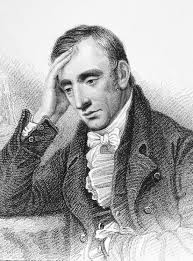
Daffodils by William Wordsworth

Image
The poem was written in the year 1802. It was first published in Poems in Two Volumes, in 1807. The very starting line of the poem “I wandered lonely as a cloud” informs the poets profound sentiments of being left alone. It was actually the death of his brother John that led him to “loneliness”. We should remind the readers that this poem was not a result of imagination. Dorothy, Wordsworth’s sister provides us an explanation of the occasion which inspired Wordsworth to produce this masterpiece:– “When we were in the woods beyond Gowbarrow park, we saw a few daffodils close to waterside.” Thus the poem is a result of actual visualization rather than imagery”. In the beginning lines, Wordsworth describes himself as a ‘cloud’ that floats over the hills. This presents an idea of seclusion. The idea of being alone is contradicted by the phrase “crowd”. This is actually the ‘setting of the poem‘. As human form Wordsworth prefers seclusion but the ‘crowd’ of daffodils bewilders his se...

"The Listeners" by Walter de la Mare

Image
"Is there anybody there?' said the Traveler, Knocking on the moonlit door; And his horse in the silence champed the grasses Of the forest's ferny floor: And a bird flew up out of the turret, Above the Traveler's head And he smote upon the door again a second time; 'Is there anybody there?' he said. But no one descended to the Traveler; No head from the leaf-fringed sill Leaned over and looked into his Grey eyes, Where he stood perplexed and still. But only a host of phantom listeners That dwelt in the lone house then Stood listening in the quiet of the moonlight To that voice from the world of men: Stood thronging the faint moonbeams on the dark stair, That goes down to the empty hall, Hearkening in an air stirred and shaken By the lonely Traveler's call. And he felt in his heart their strangeness, Their stillness answering his cry, While his horse moved, cropping the dark turf, 'Neath the starred and leafy sky; For he suddenly smote on the door, e...

Alice in Wonderland

Image
Alice is sitting with her sister outdoors when she spies a White Rabbit with a pocket watch. Fascinated by the sight, she follows the rabbit down the hole. She falls for a long time, and finds herself in a long hallway full of doors. There is also a key on the table, which unlocks a tiny door; through this door, she spies a beautiful garden. She longs to get there, but the door is too small. Soon, she finds a drink with a note that asks her to drink it. There is later a cake with a note that tells her to eat; Alice uses both, but she cannot seem to get a handle on things, and is always either too large to get through the door or too small to reach the key. While she is tiny, she slips and falls into a pool of water. She realizes that this little sea is made of tears she cried while a giant. She swims to shore with a number of animals, most notably a sensitive mouse, but manages to offend everyone by talking about her cat's ability to catch birds and mice. Left alone, she go...

Black Beauty by Anna Sewell

Image
The story begins in a meadow of 19th century England, where the young horse, Black Beauty, has just been born. There, his mother nurtures him, raises him and gives him advice which he remembers and acts on for the rest of his life: do good and give your best effort always and everything will work out. The story of his life is this advice in living form. As his youngest days pass in that meadow, he witnesses the death of his own brother and a rider in a hunting accident. Soon after, he must undergo the breaking-in process where his trainer gently teaches him to bear a rider, wear a saddle and bridle and respond to the rider’s driving signals. After this coming-of-age training, he is ready to leave the meadow of his youth. He is sold to Squire Gordon, a man who takes a liking to this strong, young, beautifully dark coated horse. Squire Gordon’s residence, Birtwick Park, thus becomes Beauty’s new home. There he meets those who will become among his dearest friends: Ginger, Merrylegs...

The Story of My Life by Helen Keller

Image
Helen Keller was born on June 27, 1880 in the small town of Tuscumbia, Alabama. When she was a year old, she was stricken with an illness that left her without sight or hearing. In the early years after her illness, it was difficult for her to communicate, even with her family; she lived her life entirely in the dark, often angry and frustrated with the fact that no one could understand her. Everything changed in March of 1887, when Helen's teacher, Anne Sullivan , came to live with the family in Alabama and turned Helen's world around. Miss Sullivan taught Helen the names of objects by giving them to her and then spelling out the letters of their name in her hand. Helen learned to spell these words through imitation, without understanding what she was doing, but eventually had a breakthrough and realized that everything had a name, and that Miss Sullivan was teaching them to her. From this point on, Helen acquired language rapidly; she particularly enjoyed learning out...